Introduction
China is an important sourcing destination for electronic components, including NTC thermistors and temperature sensor assemblies. For international OEM manufacturers, working with a Chinese supplier can provide access to a broad range of product structures, customization options, and manufacturing capabilities.
However, selecting a reliable NTC thermistor manufacturer requires more than comparing prices or reviewing a product catalog.
NTC thermistors are temperature-sensitive components whose performance depends on their resistance-temperature characteristics, manufacturing consistency, packaging, and intended operating environment. A supplier that offers the correct nominal resistance may not necessarily be able to meet the required B value, tolerance, response time, or long-term reliability requirements.
For purchasing managers and engineers in the United States and Europe, the goal should be to identify a supplier that can meet the technical specification, communicate clearly, control production quality, and support the product throughout its lifecycle.
This guide explains how to evaluate an NTC thermistor manufacturer in China, what questions to ask, and how to reduce sourcing risks before placing a production order.
1. Define Your NTC Thermistor Requirements First
Before contacting manufacturers, prepare a clear description of your application and technical requirements.
The more precisely the component is specified, the easier it becomes to compare supplier quotations on an equivalent basis.
Important parameters include:
- Nominal resistance at 25°C (R25).
- B value and its specified temperature interval.
- Resistance and B-value tolerances.
- Minimum and maximum operating temperatures.
- Required resistance limits at critical temperatures.
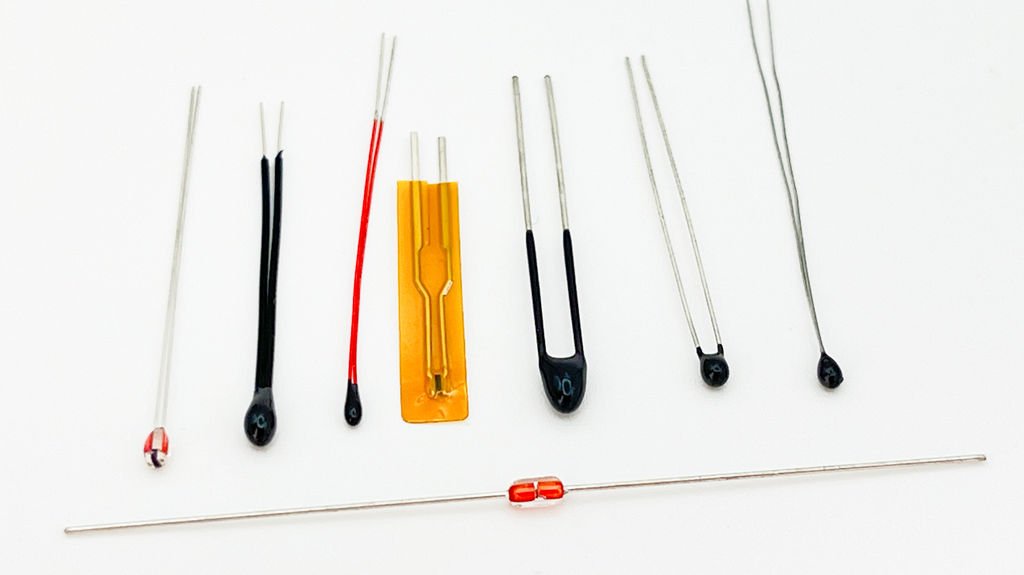
- Thermistor structure and encapsulation.
- Dimensions, lead wires, and electrical connections.
- Environmental and reliability requirements.
- Expected annual demand and initial sample quantity.
If you are purchasing a complete temperature sensor rather than a bare thermistor, additional requirements may include probe material, probe diameter and length, cable insulation, connector type, sealing method, and installation conditions.
For example, a compact epoxy-coated NTC thermistor for a control board and a stainless-steel temperature probe for a water dispenser are different products, even if they use similar sensing elements.
A detailed specification helps suppliers quote accurately and reduces the risk of comparing products that are not technically equivalent.
2. Verify the Supplier’s Actual Manufacturing Capabilities
Not every company advertising NTC thermistors performs the same manufacturing operations. Some specialize in sensing elements, some manufacture finished sensor assemblies, and others primarily distribute components.
The appropriate supplier depends on the scope of your project.
When evaluating a potential manufacturer, ask which processes it performs in-house and which processes are outsourced.
Relevant capabilities may include:
- NTC sensing element production or sourcing.
- Lead-wire preparation and attachment.
- Epoxy coating or glass encapsulation.
- Probe assembly and sealing.
- Cable and connector assembly.
- Resistance measurement and sorting.
- Final inspection and product testing.
- Custom product development.
Outsourcing is not automatically a disadvantage. Many manufacturers use qualified suppliers for specific materials or processes. The important questions are whether the supply chain is controlled, whether purchased materials meet the specification, and whether the final product is properly inspected.
For customized products, request a process overview or production-flow description. This helps establish whether the supplier understands the entire product or only a limited part of the manufacturing process.
3. Evaluate Technical Knowledge and Engineering Support
A reliable NTC thermistor supplier should understand the relationship between electrical parameters and application performance.
During technical discussions, evaluate whether the supplier can explain:
- The difference between R25 and B value.
- Why the B-value temperature interval matters.
- How resistance-temperature tables should be interpreted.
- How resistance and B-value tolerances influence measurement accuracy.
- How package dimensions and encapsulation affect response time.
- Why self-heating must be considered in temperature measurement.
- Which additional tests may be necessary for the intended environment.
The supplier should also be able to identify missing information in a specification.
For example, if you request a 10 kΩ NTC thermistor with a particular B value, a technically capable supplier should recognize that further information may be required to determine whether the component is suitable for your operating temperature range.
For a temperature probe, the supplier should also discuss mechanical construction, lead-wire insulation, thermal contact, and environmental sealing where relevant.
Good engineering support is especially valuable when developing a replacement component or a custom sensor assembly.
4. Review Datasheets, Drawings, and Technical Documentation
Before approving a sample, request the applicable technical documentation.
Depending on the product, this may include:
- Product datasheet.
- Dimensional drawing.
- Resistance-temperature table.
- R25 and B-value specifications.
- Tolerance information.
- Operating temperature range.
- Material specifications.
- Inspection or test reports.
- Relevant reliability-test results.
Check that the documents correspond to the exact part number being quoted.
For customized products, the drawing should define the important dimensions, materials, lead configuration, and assembly details. Any deviations from the agreed specification should be documented and approved.
If your organization requires PPAP documentation, material declarations, change notifications, or other quality records, communicate those requirements before production begins.
Do not assume that every supplier can provide every document, or that a general certificate proves compliance with every product-specific requirement.
A reliable supplier should explain which documents are available, which tests have been performed, and which requirements require additional evaluation.
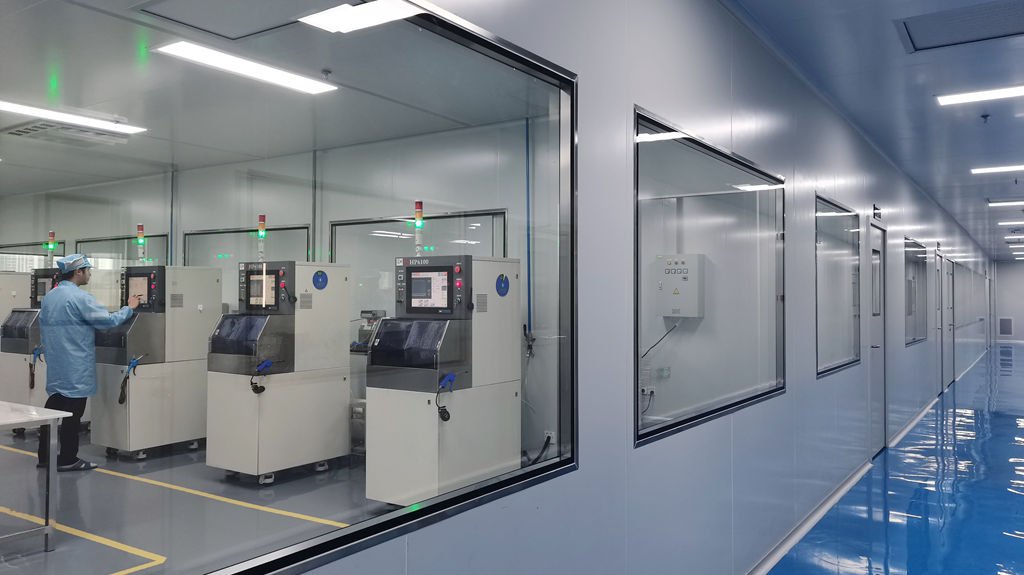
5. Evaluate Quality Management and Production Controls
A quality certificate can be useful, but it should not be the only basis for supplier approval.
Ask how the supplier controls the manufacturing process and maintains product consistency.
Relevant topics include:
Incoming material control: How are sensing elements, lead wires, insulation materials, probe tubes, and other purchased materials verified?
Process control: Are critical production parameters documented and controlled?
Resistance measurement: Is the equipment suitable for the required resistance range and measurement accuracy?
Calibration: Are measuring instruments calibrated or verified according to an established schedule?
Final inspection: Which electrical, dimensional, and visual characteristics are checked?
Traceability: Can the supplier identify the production lot and applicable inspection records?
Nonconforming products: How are defects identified, contained, investigated, and corrected?
Change management: How are changes to materials, manufacturing processes, or suppliers evaluated and communicated?
The appropriate controls depend on the product and its intended use. A standard commercial component and a safety-critical automotive application may require different approval processes.
Ask for evidence relevant to your requirements rather than relying only on general statements about quality.
6. Request Samples and Conduct Your Own Evaluation
Samples are an important step in supplier qualification, but a sample approval should not be treated as proof of consistent mass-production capability.
Start by confirming that the sample matches the proposed specification.
For an NTC thermistor, evaluation may include:
- Resistance at 25°C.
- B value or resistance at specified temperatures.
- Resistance-temperature characteristics across the required range.
- Physical dimensions and lead configuration.
- Response time under defined test conditions.
- Insulation and environmental performance, where applicable.
For a complete temperature probe, also inspect the housing, cable, connector, sealing, and assembly quality.
If the component is intended to replace an existing part, compare the candidate with the original using the same measurement conditions.
For critical applications, conduct testing in the actual circuit or final assembly. A component that performs well in a laboratory fixture may behave differently after installation because of thermal contact, mounting stress, or surrounding materials.
Record the sample lot, test conditions, results, and acceptance criteria so that the approved sample becomes a useful reference for production.
7. Assess the Supplier’s Ability to Maintain Mass-Production Consistency
A reliable supplier should be able to explain how the approved specification will be maintained after the sample stage.
Ask how the manufacturer monitors production variation and handles products near specification limits.
Depending on the component, relevant controls may include resistance measurement, parameter sorting, dimensional inspection, process monitoring, and lot-based testing.
If you require a specific resistance range at a temperature other than 25°C, confirm how that requirement will be verified.
For example, screening components at 100°C does not automatically guarantee that every unit will meet a separate resistance limit at -40°C. The relationship depends on the actual resistance-temperature characteristics and the validated selection method.
If special screening is proposed, ask the supplier to explain the test conditions, selection criteria, expected yield, and supporting correlation data.
A capable manufacturer should distinguish between measured results, calculated estimates, and guaranteed acceptance limits.
8. Compare Quotations on a Like-for-Like Basis
Price is important, but quotations should be compared only after confirming that the products meet equivalent requirements.
A lower quotation may reflect a different package, tolerance, material, testing scope, or commercial condition.
Compare the following:
- Exact part number and technical specification.
- Unit price at the same order quantity.
- Sample cost and development charges.
- Tooling or customization charges.
- Minimum order quantity.
- Lead time and production capacity.
- Inspection and documentation requirements.
- Packaging and shipping terms.
- Payment terms and quotation validity.
- Change-control and warranty conditions.
If two suppliers quote different B-value tolerances or different resistance-temperature characteristics, their prices are not directly comparable.
For customized temperature probes, confirm that both quotations include the same cable length, connector, probe dimensions, sealing requirements, and testing.
The objective is to evaluate total sourcing value rather than simply choosing the lowest initial unit price.
9. Check Communication and Export Support
For international customers, clear communication can have a substantial effect on development efficiency.
Evaluate how the supplier responds to technical questions, quotation requests, drawing revisions, sample feedback, and production changes.
A useful supplier should be able to clarify ambiguities instead of making assumptions that may later affect the product.
For export orders, confirm that the supplier can support the documentation and logistics required by your purchasing process.
Depending on the transaction, this may include commercial invoices, packing lists, country-of-origin information where applicable, shipping documentation, and product-specific declarations or reports.
If your application involves food-contact materials, medical equipment, automotive systems, or other regulated environments, identify the exact applicable requirements. Do not assume that a general material statement establishes compliance for the complete finished assembly.
10. Common Warning Signs When Selecting a Supplier
Consider investigating further if a potential supplier:
- Cannot identify the exact specification of the quoted component.
- Provides inconsistent R25, B-value, or dimensional information.
- Claims universal interchangeability based only on nominal resistance.
- Refuses to clarify which manufacturing processes are outsourced.
- Provides reports that do not identify the relevant product or material.
- Cannot explain its inspection method or acceptance criteria.
- Makes broad certification claims without supporting documentation.
- Changes materials or specifications without an agreed approval process.
One warning sign does not automatically prove that a supplier is unsuitable. Ask for clarification and evaluate the response against your actual requirements.
The objective is to establish whether the supplier can demonstrate the technical and quality capabilities needed for your application.
11. A Practical Supplier Qualification Checklist
Before placing a production order, confirm that the following items have been addressed:
- The technical specification is complete and approved.
- The quotation identifies the correct product and revision.
- Samples have been evaluated against defined acceptance criteria.
- Required drawings and technical documents are available.
- The supplier’s quality controls have been reviewed.
- Production lead time and capacity have been discussed.
- Required inspection records and documentation are agreed.
- Packaging, shipping, and commercial terms are clear.
- Change notification and nonconformance handling are understood.
- The supplier has confirmed the process for maintaining production consistency.
Not every project requires the same level of qualification. The checklist should be adjusted according to the product’s risk, annual demand, customer requirements, and application.
Conclusion
Finding a reliable NTC thermistor manufacturer in China requires a structured evaluation of technical capability, manufacturing control, documentation, sample performance, and commercial reliability.
The strongest supplier is not necessarily the one with the largest catalog or the lowest quotation. It is the supplier that can demonstrate its ability to meet your specification and maintain that performance throughout production.
For OEM manufacturers, investing time in supplier qualification can reduce the risk of component mismatch, repeated development work, and unexpected production problems.
Looking for an NTC thermistor or temperature sensor supplier?
Temprix works with NTC thermistors and temperature sensor solutions for OEM and industrial applications. Share your technical specification, drawing, existing part number, or application requirements with our team to discuss standard and customized solutions.