
As a core component in temperature sensing systems, NTC thermistors (Negative Temperature Coefficient Thermistors) are widely used in automotive, HVAC, home appliances, medical equipment, and industrial control fields. Their performance directly determines the accuracy, reliability, and service life of the entire sensing system. For manufacturers and suppliers, ensuring the quality stability and consistency of NTC thermistors in production and supply is not only a core competitiveness but also a basic commitment to customers.
In practical applications, even tiny deviations in the resistance value (R₂₅), B-value, or response time of NTC thermistors can lead to misjudgment of temperature data, affecting the normal operation of equipment—for example, inaccurate temperature control in automotive battery management systems may cause safety hazards, and unstable thermistor performance in medical devices may lead to incorrect diagnosis results. Therefore, achieving strict control throughout the entire process from raw material selection to supply chain management is the key to solving this problem.
Based on 15 years of experience in NTC thermistor manufacturing and global supply, this article will elaborate on the core measures to ensure quality stability and supply consistency, focusing on three key links: material and production process control, strict quality inspection, and robust supply chain management.
1.Material & Production Consistency: The Foundation of Quality Stability
The quality and consistency of NTC thermistors start from the source—raw material formulation and production process control. Any deviation in the production link will be amplified in the final product, leading to inconsistent performance. Therefore, we need to implement refined control over every step of the production process to ensure that each thermistor meets the same standard.
1.1 Powder Formulation: The Core of Thermistor Performance Consistency
The electrical performance of NTC thermistors is mainly determined by the ceramic powder formulation, which is composed of transition metal oxides such as manganese, cobalt, and nickel. The homogeneity of the powder mixture and the consistency of particle size directly affect the resistance-temperature characteristics (R-T curve) of the thermistor.
To solve this problem, we adopt proprietary ceramic processing technology. First, we select high-purity raw materials (purity ≥ 99.9%) and strictly control the impurity content—even trace impurities can cause deviations in the B-value and stability of the thermistor. Then, through a high-precision mixing process, we ensure that manganese, cobalt, nickel, and other oxides are fully and uniformly mixed, avoiding local concentration differences. At the same time, we use a professional grinding process to control the powder particle size within a uniform range (2-5 μm), ensuring that the ceramic body formed by pressing has consistent density and structure.
Compared with ordinary mixing methods, our proprietary technology can reduce the particle size deviation by more than 30%, effectively ensuring that the electrical parameters of the thermistor are within the standard range. In addition, we conduct batch testing on each batch of ceramic powder, verifying its uniformity and electrical properties before it enters the next process, eliminating unqualified raw materials from the source.
1.2 Precision Geometry: Controlling Microscopic Variances to Ensure Parameter Stability
The geometric dimensions of NTC thermistor chips/disks (such as thickness, diameter, and flatness) have a significant impact on their base resistance (R₂₅) and B-value. Microscopic variances (even within 0.01 mm) can lead to differences in the current distribution inside the thermistor, resulting in inconsistent resistance values.
To avoid this, we abandon traditional manual processing and adopt automated ceramic sawing and precision compression molding technology. The automated sawing equipment uses high-precision laser positioning, with a cutting error of less than 0.005 mm, ensuring that the dimensions of each chip are consistent. In the compression molding link, we use a servo-controlled press to maintain uniform pressure (error ≤ ±1%) during the molding process, ensuring that the density of the ceramic body is uniform and avoiding internal pores or cracks that may affect performance.
After molding, we use a high-precision measuring instrument to inspect the geometric dimensions of each batch of chips, with a sampling rate of 100% for key dimensions. Only products that meet the standard dimensions can enter the next process, ensuring that the base resistance (R₂₅) and B-value of the thermistor have good consistency.
1.3 Automated Assembly: Eliminating Human Error to Ensure Product Integrity
The assembly link is another key factor affecting the quality consistency of NTC thermistors. Manual wire bonding, coating, and other operations are prone to human errors, such as uneven wire bonding force, incomplete coating, or damage to the semiconductor chip, which may lead to unstable performance or shortened service life of the thermistor.
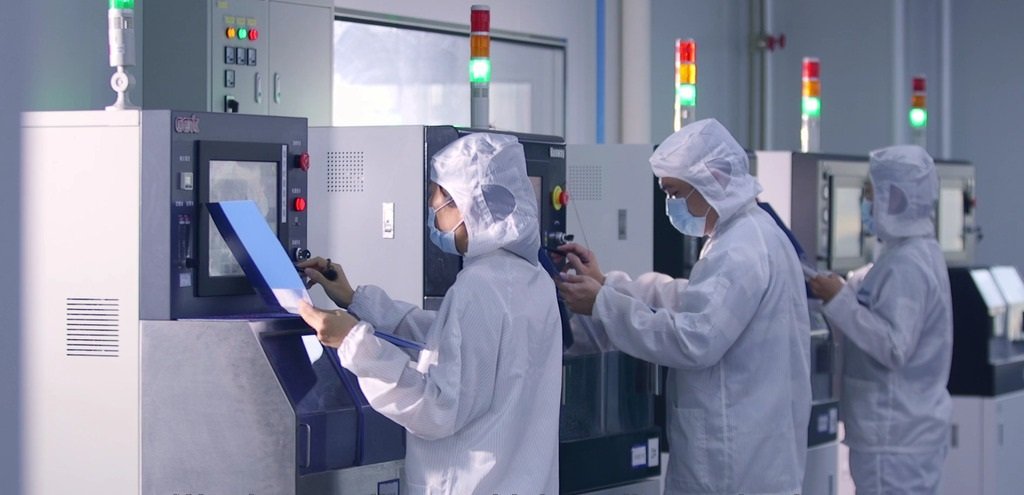
To solve this problem, we fully adopt automated assembly equipment, including automated wire bonding machines, glass-sealing equipment, and epoxy-coating production lines. The automated wire bonding machine uses ultrasonic welding technology to ensure stable and uniform bonding between the lead wire and the chip, avoiding poor contact caused by manual operation. The glass-sealing and epoxy-coating processes are completed in a closed environment, with precise control of the coating thickness and uniformity, effectively protecting the semiconductor chip from external moisture, dust, and mechanical damage.
In addition, the automated assembly line is equipped with real-time monitoring equipment, which can detect abnormalities such as poor wire bonding or incomplete coating in real time and automatically remove unqualified products. This not only eliminates human error but also improves production efficiency while ensuring the consistency of product quality.
2.Strict Quality Control (QC): The Barrier to Prevent Unqualified Products
Even with strict control over the production process, it is still necessary to establish a comprehensive quality inspection system to screen out unqualified products and ensure that every thermistor delivered to customers meets the standard. We adopt a multi-stage, full-process quality inspection mechanism, covering from raw material incoming inspection to finished product delivery inspection, with a focus on three key inspection links.
2.1 Calibration Testing: Aligning with International Standards to Ensure Accuracy
The accuracy of NTC thermistors is directly related to the reliability of temperature sensing. To ensure that the thermistors meet international standards (such as IEC 60539, ASTM E1367), we conduct professional calibration testing using temperature-controlled liquid baths.
The temperature-controlled liquid bath can maintain a stable temperature environment (temperature accuracy ±0.01℃ to±0.05℃), and we place the thermistor in the liquid bath to test its resistance value at different temperatures (such as -40℃, 0℃, 25℃, 100℃). By comparing the test data with the standard R-T curve, we calibrate the resistance value and B-value of the thermistor to ensure that its error is within the allowable range (usually ±1% for R₂₅, ±2% for B-value). In addition, we regularly calibrate the testing equipment to ensure the accuracy of the test data. Each batch of thermistors must pass the calibration test before entering the next inspection link, ensuring that their performance meets international standards and customer requirements.
2.2 100% End-of-Line (EOL) Testing: Eliminating Parametric Drift
Parametric drift (such as changes in R₂₅ and B-value) is a common quality problem in NTC thermistors, which may be caused by incomplete sintering, improper assembly, or other factors. To eliminate such unqualified products, we implement 100% end-of-line testing for all finished thermistors.
The EOL testing process includes four key indicators: nominal resistance at 25℃ (R₂₅), B-value (usually B25/50 or B25/85), dissipation factor, and response time. We use automated testing equipment to complete the testing of these indicators for each thermistor in a short time. For products with parameter deviations exceeding the standard, the equipment will automatically mark and remove them, ensuring that only products with stable parameters are delivered.
Compared with sampling inspection, 100% EOL testing can effectively avoid unqualified products from flowing into the market, greatly improving the reliability of product quality. According to our statistics, this testing method can reduce the unqualified product rate by more than 95%, ensuring the consistency of product performance.
2.3 Environmental Stress Screening (ESS): Ensuring Long-Term Stability in Harsh Environments
NTC thermistors are often used in harsh environments, such as high temperature, high humidity, and thermal shock (such as automotive engine compartments, industrial control equipment). Therefore, it is necessary to test their long-term stability under environmental stress to ensure that they can work normally in the service life cycle.
We conduct environmental stress screening (ESS) on each batch of thermistors, including thermal shock testing and high-humidity testing. In the thermal shock test, the thermistor is placed in a thermal shock chamber, and the temperature is cycled between -40℃ and 125℃ (100 cycles), simulating the temperature changes in the actual application environment. In the high-humidity test, the thermistor is placed in a high-humidity chamber (relative humidity 95%, temperature 40℃) for 1000 hours, testing its resistance stability after being affected by moisture.
After the ESS test, we re-test the key parameters of the thermistor. Only products with parameter changes within the allowable range (≤ ±2%) are considered qualified. This test can effectively screen out products with poor environmental adaptability, ensuring that the thermistor can maintain stable performance in harsh environments for a long time.
3. Supply Chain Stability: Ensuring Continuous and Consistent Supply
Quality stability is not only related to production and inspection but also closely related to supply chain management. In the global supply chain environment, raw material shortages, supplier delays, and other factors may affect the production progress and product quality. Therefore, establishing a robust supply chain management system is essential to ensure the consistency of NTC thermistor supply and quality.
3.1 Dual-Sourcing Materials: Reducing Supply Risks
Critical raw materials (such as lead wires, glass beads, and epoxy resins) directly affect the quality of NTC thermistors. To avoid supply disruptions caused by a single supplier, we adopt a dual-sourcing strategy for critical raw materials.
We pre-qualify two or more qualified suppliers for each critical raw material, evaluating their production capacity, quality control level, and delivery cycle. During the cooperation process, we conduct regular audits of suppliers to ensure that their product quality remains stable. When one supplier encounters production problems or delivery delays, we can quickly switch to another supplier to ensure the continuous supply of raw materials, avoiding production interruptions and quality fluctuations caused by raw material shortages.
3.2 Buffer Stock: Mitigating Supply Chain Disruptions
In the global supply chain, factors such as transportation delays, natural disasters, and policy changes may lead to supply disruptions. To mitigate such risks, we maintain a strategic buffer stock of raw materials and finished components.
For raw materials, we stock up on 3-6 months of inventory according to the production volume, ensuring that even if there is a short-term supply disruption, production can continue normally. For finished components, we maintain a certain amount of inventory based on customer demand forecasts, which can not only meet the sudden increase in customer demand but also avoid delivery delays caused by production bottlenecks.
In addition, we use an intelligent inventory management system to real-time monitor the inventory level of raw materials and finished products, automatically triggering replenishment reminders when the inventory is lower than the safety threshold, ensuring that the buffer stock is always maintained at a reasonable level.
Conclusion: Quality and Consistency Are the Core of Long-Term Development
Ensuring the quality stability and consistency of NTC thermistor production and supply is a systematic project that requires strict control over the entire process from raw material formulation, production process, and quality inspection to supply chain management. By adopting proprietary ceramic powder processing technology, automated production and assembly equipment, a full-process quality inspection system, and a robust supply chain management strategy, we can effectively ensure that each NTC thermistor meets the same high standards, providing customers with reliable temperature sensing solutions.
At Temprix, with 15 years of experience in NTC thermistor manufacturing and global supply, we have always taken quality stability and consistency as our core commitment. We continuously optimize production processes, improve quality control systems, and strengthen supply chain management, ensuring that our products can meet the needs of customers in various industries. In the future, we will continue to invest in technological research and development, committed to providing world-leading NTC thermistor solutions and creating greater value for customers.